

Chapter 14
The Process of Chemical Reactions
585
ave you ever considered becoming a chemical engineer? The men and women in this profession develop industrial processes for the large-scale production of the chemicals we use to fertilize and protect our crops; synthesize textiles, plastics, and other ubiquitous modern materials; cure our diseases; and so much more. Or, perhaps you have considered becoming a research chemist, who figures out new ways to make existing chemicals and ways to produce chemicals that have never existed before. Although these two careers require different sets of skills and aptitudes, they also have some concerns and traits in common. For example, both kinds of chemist need to understand the factors that affect the speed with which chemicals can be made, and to know the reasons why chemical changes do not always proceed to 100% products. Armed with this knowledge, chemical engineers and research chemists can develop ways to make chemical products more efficiently, more safely, and more economically.
This chapter introduces a model for visualizing the changes that take place in a reaction mixture as a chemical reaction proceeds. The model describes the requirements that must be met before a reaction can occur, and explains why certain factors speed the reaction up or slow it down. It will help us understand why some chemical reactions are significantly reversible and why such reactions reach a dynamic equilibrium with equal rates of change in both directions. It will also allow us to explore the factors that can push a chemical equilibrium forward to create more desired products or backwards to minimize the formation of unwanted products.
14.1 Collision Theory: A Model for the Reaction Process
14.2 Rates of Chemical Reactions
14.3 Reversible Reactions and Chemical Equilibrium
14.4 Disruption of Equilibrium

Describe the particle nature of gases. (Section 3.1)
Write or recognize the definitions of energy, kinetic energy, potential energy, heat, radiant energy, exergonic, exothermic, endergonic, endothermic, and catalyst. (Chapters 4 and 7 Glossaries.)
Describe the relationship between average internal kinetic energy and temperature (Section 4.1)
Describe the relationship between stability and potential energy. (Section 4.1)

Explain why energy is required to break chemical bonds. (Section 4.1)
Explain why energy is released when chemical bonds are formed. (Section 4.1)
Explain why some chemical reactions release heat to their surroundings. (Section 7.4)
Explain why some chemical reactions absorb heat from their surroundings. (Section 7.4)
Write a general description of dynamic equilibrium. (Section 12.1)

Review Skills
The presentation of information in this chapter assumes that you can already perform the tasks listed below. You can test your readiness to proceed by answering the Review Questions at the end of the chapter. This might also be a good time to read the Chapter Objectives, which precede the Review Questions.
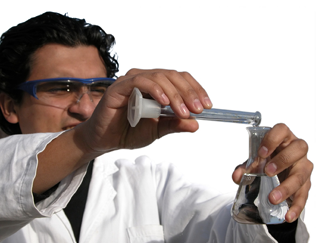
Research chemists want to know how they can produce chemicals of the highest purity in the shortest time.