

Chapter 16
Nuclear Chemistry
691
tan is going to visit his son Fred at the radiology department of a local research hospital, where Fred has been recording the brain activity of kids with learning differences and comparing it to the brain activity of kids who excel in normal school environments. To pursue this research, Fred uses imaging technology developed through the science of nuclear chemistry, the study of changes that occur within the nuclei of atoms. But even before getting into his car to go see Fred, Stan is already surrounded by substances undergoing nuclear reactions. In fact, nuclear reactions accompany Stan wherever he goes. He has strontium-90 in his bones and iodine-131 in his thyroid, and both substances are constantly undergoing nuclear reactions of a type known as beta emission. Stan is not unique in this respect. All of our bodies contain these substances and others like them.
Stan is surrounded by nuclear changes that take place outside his body, as well. The soil under his house contains a small amount of uranium-238, which undergoes a type of nuclear reaction called alpha emission. A series of changes in the nucleus of the uranium-238 leads to an even smaller amount of radon-222, which is a gas that he inhales in every breath he takes at home. Subsequently, radon-222 undergoes a nuclear reaction very similar to the reaction for uranium-238.
On Stan’s way to the hospital, he passes a nuclear power plant that generates electricity for the homes and businesses in his city by means of yet another kind of nuclear reaction. When Stan gets to the hospital, Fred shows him the equipment he is using in his research. It is a positron emission tomography (PET) machine that allows Fred to generate images showing which parts of a child’s brain are being used when the child does certain tasks. Positron emission is another type of nuclear change described in this chapter.
There are good reasons why, in the preceding seventeen chapters, our exploration of chemistry has focused largely on the behavior of electrons. Chemistry is the study of the structure and behavior of matter, and most of our understanding of such phenomena comes from studying the gain, loss, and sharing of electrons. At the same time, however, we have neglected the properties of the nuclei of atoms and the changes that some nuclei can undergo. In this chapter, we turn our attention toward the center of the atom to learn what is meant by nuclear stability and to understand the various kinds of nuclear reactions.
16.1 The Nucleus and Radioactivity
16.2 Uses of Radioactive Substances
16.3 Nuclear Energy

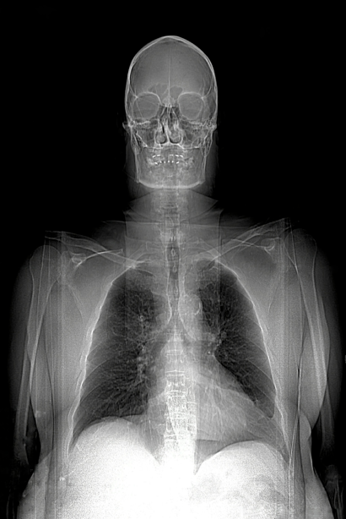
PET scans and MRI scans (like the one above) use changes in the nuclei of atoms to create an image of the soft tissues of the body.